
Acupuncture for Migraines and Headaches: What the Research Really Says
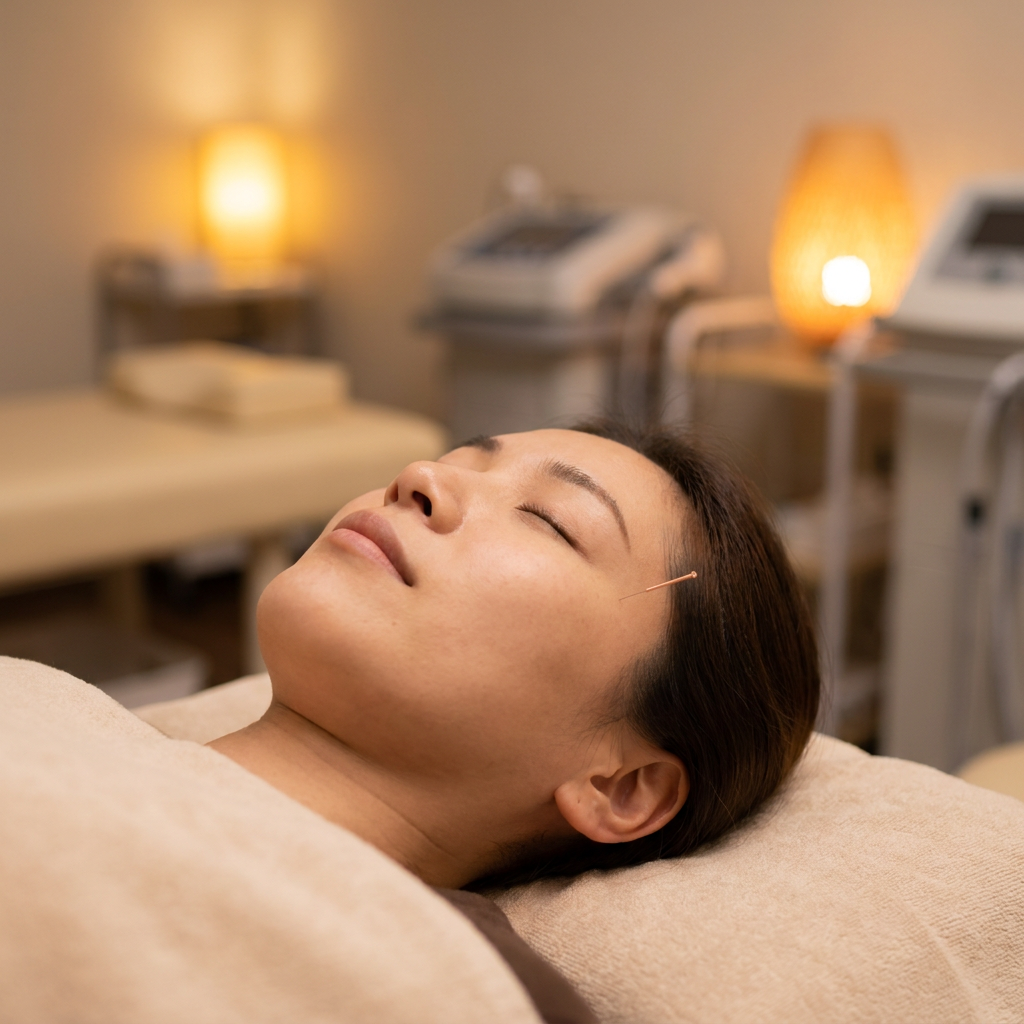
If Migraines Run Your Life, You're Not Alone
Migraines are far more than a "bad headache." They are a disabling neurological disorder — often bringing intense, pulsating, one-sided head pain, nausea, vomiting, and an overwhelming sensitivity to light and sound. For millions of people, a migraine can wipe out an entire day, a weekend, or more.
Here in South Florida, where the heat, humidity, glaring sun, and relentless pace of life are all recognized migraine triggers, the search for effective, sustainable relief is real and urgent. Prescription preventives and pain medications help some people — but they come with side effects, and many patients still don't get adequate control. That's why more and more people in Boca Raton, Delray Beach, Boynton Beach, and the surrounding areas are turning to acupuncture.
This article walks you through what acupuncture actually does for migraines, what the clinical research shows, what a treatment course looks like, and whether it might be the right next step for you.
What Acupuncture Does in the Body
Acupuncture involves the precise placement of very fine needles at specific anatomical points on the body. From a classical Chinese medicine perspective, this restores the balanced flow of qi (vital energy) along pathways called meridians. From a modern neuroscience perspective, the explanation is increasingly concrete.
Research using neuroimaging has shown that acupuncture engages brain regions involved in pain sensation, emotional processing, and pain modulation — including the default mode network and the descending pain modulation system. It also influences the release of neurotransmitters including serotonin and endorphins, and modulates the neuroinflammatory pathways that are central to migraine pathology.
In other words, acupuncture isn't simply relaxing tight muscles. It is engaging the nervous system at a level that can interrupt the cycle of migraine.
What the Research Actually Shows
The evidence base for acupuncture and migraines is genuinely substantial — and growing.
Reduces Migraine Frequency
A systematic review of 22 clinical trials involving nearly 5,000 patients found evidence that acupuncture reduces headache frequency in people with migraines, with an effect that may be comparable to that of preventive medications. Notably, headache frequency dropped by 50% or more in up to 59% of individuals receiving acupuncture, though study methods, response rates, and follow-up periods differ, and evidence quality varies across outcomes.
What Comparisons With Preventive Drugs Show
Multiple trials and reviews have compared acupuncture with preventive migraine medications, but results vary by study and patient. This is meaningful: many patients discontinue preventive drugs because of weight gain, cognitive fog, fatigue, or mood changes. Acupuncture is generally considered low-risk when performed by a licensed practitioner, though temporary soreness, bruising, lightheadedness, or fatigue can occur.
One randomized controlled trial — the ACUMIGRAN study — directly compared a course of acupuncture sessions against the best available pharmacological preventive treatment. Both groups received their assigned treatment for several months, and both were followed up at three and six months post-treatment. This kind of head-to-head comparison gives clinicians real-world data that simple placebo studies cannot.
Reduces Pain Intensity, Attack Duration, and Medication Use
Clinical studies have demonstrated that acupuncture may reduce not only the frequency of migraine attacks but also their pain intensity, their duration, and how much acute pain medication patients need to take. For people who rely heavily on triptans or over-the-counter pain relievers, that last point is particularly important — overuse of acute headache medications is itself a known driver of chronic daily headache.
Special Relevance for Hormonal Migraines
Menstrual migraine — triggered by hormonal fluctuations around the menstrual cycle — is notoriously difficult to treat with standard therapies. Research in this area, including a recent meta-analysis covering 39 randomized controlled trials and over 2,500 participants, found that acupuncture significantly reduced pain severity scores, decreased attack frequency and duration, and was associated with increased serum serotonin levels. This makes acupuncture a particularly compelling option for women whose migraines are hormonally driven — much like it is for those exploring acupuncture for menstrual cramps.
How Acupuncture Addresses Migraine: The Mechanisms
Understanding why acupuncture helps is no longer entirely speculative. Researchers have identified several overlapping mechanisms:
- Serotonin regulation. Serotonin imbalances are central to migraine. Acupuncture has been shown to modulate the serotonin system, which helps regulate both pain and mood — explaining why it can also reduce the anxiety and depression that frequently accompany chronic migraine.
- Neuroinflammation. Acupuncture may reduce the release of pro-inflammatory neuropeptides involved in triggering migraine attacks, including those associated with cortical spreading depression — the wave of electrical activity thought to underlie the migraine aura.
- Central sensitization. Chronic migraine involves a "sensitized" pain system that amplifies signals. Acupuncture appears to modulate this central sensitization, making the nervous system less reactive over time.
- Endocannabinoid system. Emerging research points to acupuncture's engagement with the endocannabinoid system, which plays a role in pain modulation and stress response.
- Autonomic nervous system balance. By calming the sympathetic nervous system and supporting parasympathetic tone, acupuncture helps address the stress and autonomic dysregulation that often precede a migraine attack.
Tension Headaches Too
Migraines get most of the attention, but acupuncture is also well-studied for tension-type headaches — the dull, pressure-like "band around the head" headaches that are the most common headache type overall. The same mechanisms that dampen central sensitization and reduce neuroinflammation apply here. Many patients who come in for migraines find that their background tension headaches also resolve or significantly diminish.
What Treatment Looks Like at Acupuncture Xperts
At Acupuncture Xperts in Boca Raton, Dr. Matthew Winke, DACM takes a thorough, individualized approach to headache and migraine care. Because migraines are rarely caused by a single factor, treatment is not one-size-fits-all.
A typical course of care for migraines looks like this:
- New Patient Visit (75 minutes, $189): Dr. Winke conducts a thorough intake covering your headache history, triggers, menstrual cycle if relevant, sleep quality, stress levels, diet, and any current medications. He then performs a traditional Chinese medicine assessment and your first treatment — often targeting both the immediate presentation and the underlying constitutional pattern.
- Return Visits (60 minutes, $159): Subsequent sessions build on the first. For migraines, clinical guidelines and research suggest a course of at least six sessions — often weekly to start, then spacing out as improvement is sustained.
- Electro-Boost Add-On: For patients with stubborn or high-frequency migraines, electro-acupuncture (gentle electrical stimulation through the needles) can deepen the neurological effect. Research has specifically examined electroacupuncture for migraines, with a meta-analysis of 13 randomized controlled trials examining headache frequency, duration, and pain measures across treatment and control groups.
- Cupping or Gua Sha: Where cervicogenic (neck-driven) headache is a contributing factor, cupping therapy or gua sha along the neck and upper back can release the muscular tension that feeds into headache cycles.
Dr. Matthew Winke, DACM, is a Florida-licensed acupuncturist whose education includes additional clinical training in Beijing, China. Migraine care is planned individually around each patient's history, symptom pattern, and treatment goals.
How Many Sessions Will You Need?
This is the most common question — and an honest one. Most clinical trials for migraine prevention use a course of 8–12 sessions, often delivered weekly. Some people notice changes during a course of care, but response and timing vary; no visit count or durable response can be promised.
For patients seeking long-term management, periodic maintenance visits (monthly or every few weeks) can sustain the benefit. The practice offers packages of 5, 10, or 15 visits.
Is Acupuncture Right for Your Migraines?
Acupuncture is worth serious consideration if any of the following apply to you:
- You experience migraines more than once a month.
- You've tried preventive medications but found the side effects unacceptable.
- Your migraines are hormonally triggered (menstrual, perimenopause-related).
- You are pregnant or trying to conceive and want to avoid pharmaceutical options.
- You rely heavily on acute pain medications and are concerned about medication-overuse headache.
- Stress is a clear trigger, and you're looking for an approach that addresses both body and nervous system.
- You want to complement (not necessarily replace) your current treatment plan.
Acupuncture is also safe to use alongside conventional migraine treatments. Many patients use it as an integrative layer — continuing their prescribed medications while using acupuncture to reduce frequency and severity over time. If you're unsure where to start, learning how to tell if acupuncture is working can help you set realistic benchmarks as you begin care.
A Note on Realistic Expectations
Acupuncture is not a one-session cure for migraines. It is a process of gradually recalibrating a nervous system that has become sensitized and reactive. Most patients see meaningful improvement within four to six sessions; the full benefit of a preventive course often emerges over two to three months. Research includes reports of benefits continuing after a treatment course, but follow-up periods and individual response vary.
We'll always give you an honest picture of where you are and what to expect. If acupuncture is helping, you'll know it.
Ready to Try a Different Approach?
If you're in Boca Raton, Delray Beach, Boynton Beach, or anywhere in Palm Beach or Broward County, Acupuncture Xperts is a short drive away. Appointments are available on select days at our office in the One Park Place building, just east of Embassy Suites near I-95 and Yamato Road.
New patient visits are 75 minutes and include a full intake and your first treatment. You can book online anytime, or call us at (561) 709-6512.
Migraines don't have to define your schedule. Let's see what acupuncture can do.