Bell’s Palsy Treatment
Bell’s Palsy Treatment in Boca Raton, FL
Acupuncture care focuses on facial comfort and coordinated movement during Bell’s palsy recovery.
Medically reviewed by Dr. Matthew Winke, DACM · Last reviewed
What Is Bell's Palsy?
Bell’s palsy is sudden weakness or paralysis on one side of the face associated with inflammation of the facial nerve. Most people improve over time. Acupuncture treatment focuses on comfort, facial awareness, and coordination during recovery after medical evaluation.
The facial nerve (the seventh cranial nerve) travels from the brainstem through a narrow, bony canal in the skull near the ear before branching out to control the muscles of facial expression on that side. When this nerve becomes inflamed, it swells within that narrow canal — and because the canal cannot expand, the swelling itself compresses and further irritates the nerve, which is part of why symptoms can escalate quickly over hours to a day or two.
Read more ↓Read less ↑
Bell’s palsy typically comes on quickly — sometimes overnight — and can affect the ability to close one eye, smile evenly, or control facial expression on the affected side. Most cases are believed to be triggered by a viral inflammation of the nerve, and the large majority of patients see significant, often complete, recovery over weeks to months.
After prompt medical evaluation, personalized acupuncture treatment for Bell’s palsy focuses on facial comfort, awareness, and coordinated movement during recovery. Treatment is gentle and tailored to facial weakness, eye closure, and the movements you want to regain. Sessions center on comfortable facial activity and daily tasks while urgent medical needs remain addressed first.
At Acupuncture Xperts, our team provides gentle acupuncture after urgent causes have been assessed, with treatment shaped by facial movement, eye closure, and recovery goals. Bell’s palsy can affect smiling, speaking, eating, and eye protection, so sessions focus on comfortable coordination for the activities that matter to you.
Prompt medical care and eye protection take priority when closure is impaired. New facial weakness needs immediate medical evaluation, and treatment begins after urgent concerns are assessed.
How acupuncture helps Bell's Palsy
- Improving comfort during recovery
- Building facial awareness
- Encouraging coordinated facial movement
- Easing facial tension
Symptoms
- Sudden weakness or drooping on one side of the face
- Difficulty closing one eye
- Uneven smile or difficulty controlling facial expression
- Drooling from one side of the mouth
- Loss of taste on the front of the tongue (affected side)
- Increased sensitivity to sound in one ear
- Pain behind or in front of the ear on the affected side
Risk Factors
- Recent viral illness
- Pregnancy (especially third trimester)
- Diabetes
- Family history of Bell’s palsy
- Upper respiratory infection
- Compromised immune function
When to Seek Professional Care
- Sudden facial weakness or drooping of any degree
- Difficulty closing one eye
- Any new one-sided facial symptoms (always rule out stroke promptly)
- Pain behind or in front of the ear
- Symptoms not improving after several weeks
- Ongoing difficulty with eye closure or protection
Common Causes
Viral Inflammation
Most commonly linked to reactivation of the herpes simplex virus.
Nerve Swelling and Compression
Inflammation causes the facial nerve to swell within its narrow bony canal, compressing the nerve itself.
Immune Response
The body’s own inflammatory response can contribute to nerve irritation.
Recent Illness or Immune Stress
Bell’s palsy sometimes follows a cold, flu, or period of high stress.
Pregnancy
Associated with a modestly higher risk, particularly in the third trimester.
How We Help
Depending on your evaluation, your plan may draw on one or more of the following therapies, often beginning with Acupuncture for Bell’s Palsy or Gentle Massage & Facial Exercise Support.
After medical evaluation, gentle acupuncture treatment for Bell’s palsy focuses on comfort, facial awareness, and coordination during recovery. Treatment uses individualized points selected for your facial pattern.
Gentle facial and neck massage treatment for Bell’s palsy focuses on comfort and body awareness. Soft-tissue work uses carefully guided facial movement to encourage symmetry and coordination.
- Improving facial and neck comfort
- Building facial awareness
- Encouraging symmetrical movement
- Improving comfortable facial positioning
Photobiomodulation treatment for Bell’s palsy uses noninvasive light after appropriate evaluation, with parameters selected for facial recovery goals.
- Improving facial comfort
- Encouraging coordinated facial movement
- Building facial awareness
- Promoting facial relaxation
Because early treatment matters most with Bell's palsy, we make room for patients traveling from Delray Beach, Boynton Beach, and Parkland as quickly as possible.
What the Research Says
Selected research and clinical references for bell's palsy, with findings and links to the original publications.
Clinical Practice Guideline
Clinical Practice Guideline: Bell’s Palsy
The guideline strongly recommends oral steroids within 72 hours for eligible patients and eye protection when eye closure is impaired. It makes no recommendation for or against acupuncture or physical therapy because the evidence was insufficient.
Baugh RF, Basura GJ, Ishii LE, et al. Clinical Practice Guideline: Bell’s Palsy. Otolaryngol Head Neck Surg. 2013;149(3 Suppl):S1-S27. View on PubMed →
Systematic Review · Meta-Analysis
Acupuncture for the Treatment of Peripheral Neuropathy
The review included Bell’s palsy trials within a broader analysis of peripheral neuropathies and reported favorable pooled results. The authors also noted important limitations in trial quality and called for larger confirmatory studies, so the findings do not establish acupuncture as standard treatment for Bell’s palsy.
Dimitrova A, Murchison C, Oken B. Acupuncture for the Treatment of Peripheral Neuropathy: A Systematic Review and Meta-Analysis. J Altern Complement Med. 2017;23(3):164-179. View on PubMed →
Cochrane Systematic Review
Physical Therapy for Bell’s Palsy
Low-quality evidence suggested tailored facial exercises may help some patients, particularly in chronic cases, but the review found insufficient high-quality evidence to determine the effectiveness of physical therapies overall.
Teixeira LJ, Valbuza JS, Prado GF. Physical Therapy for Bell’s Palsy (Idiopathic Facial Paralysis). Cochrane Database Syst Rev. 2011;(12):CD006283. View on PubMed →
Randomized Controlled Trial
High- and Low-Level Laser Therapy for Bell’s Palsy
In a small 48-person trial, laser groups improved more than the exercise-and-massage-only group. The study was small, used specific laser devices and protocols, and does not establish that every LED or phototherapy device produces the same result.
Alayat MSM, Elsodany AM, El Fiky AAR. Efficacy of High and Low Level Laser Therapy in the Treatment of Bell’s Palsy: A Randomized Double Blind Placebo-Controlled Trial. Lasers Med Sci. 2014;29(1):335-342. View on PubMed →
Sudden facial weakness requires prompt medical evaluation to rule out stroke and other causes. Adjunctive services should not delay guideline-supported medical treatment or eye protection.
These summaries are educational and describe published research; they are not a guarantee of individual results.
What to Expect
We focus on conservative, non-surgical, whole-person care aimed at addressing root contributors rather than only masking symptoms.
- 1
Initial Consultation
Care begins with a thorough conversation about your health history, lifestyle, and specific goals for addressing your bell's palsy.
- 2
Evaluation
We assess the underlying contributors — movement, posture, muscular patterns, and overall wellness — to understand what may be driving your symptoms.
- 3
Personalized Treatment
Based on your evaluation, we build a customized plan that may combine several complementary therapies suited to your individual needs.
- 4
Supporting Recovery
Beyond in-office care, we offer guidance on movement, ergonomics, and lifestyle adjustments to help support lasting results.
Start here
New Patient Visit · 75 minutes · $189
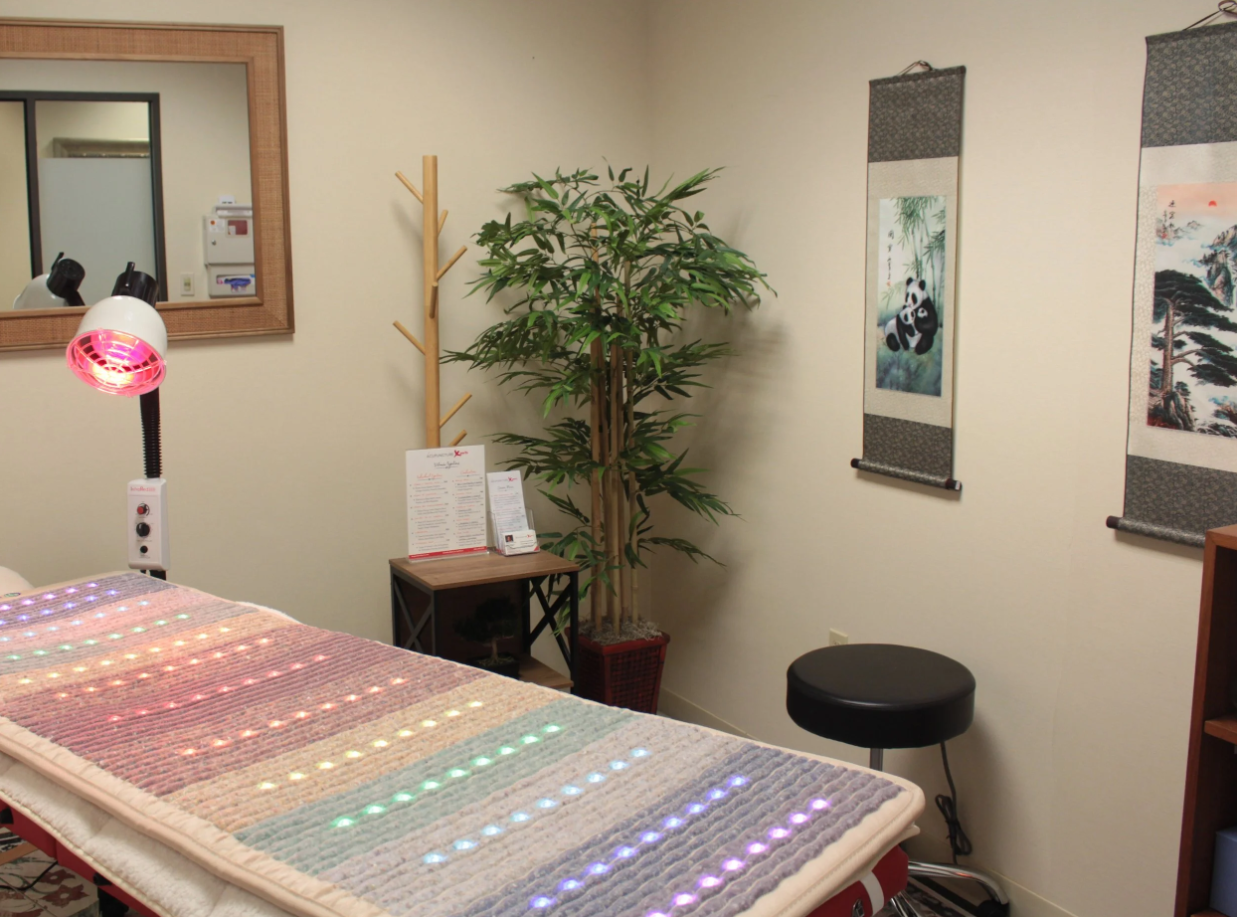
Includes a detailed medical history review, Chinese medicine assessment, physical and orthopedic exam, personalized care plan, and treatment with electro-acupuncture, cupping, PEMF and infrared light therapy.
Book Your First VisitExercises & Self-Care
Gentle facial movement work supports muscle re-education as nerve function returns, and pairs well with in-office treatment. The practices below are conservative starting points — your specific exercises should be guided by your presentation.
Keep all movements light and symmetric-focused rather than forced. These are general examples, not a personalized program.
Circulation
Gentle Facial Massage
How much: 5 minutes, once or twice daily
Show steps ▾Hide steps ▴
- Using clean fingertips, apply light circular strokes to the affected side of the face.
- Work from the center of the face outward across the forehead, cheek, and jaw.
- Keep the pressure gentle throughout — this should feel soothing, not forceful.
Muscle Re-Education
Mirror Practice
How much: 5–10 minutes daily, or as guided
Show steps ▾Hide steps ▴
- Sit in front of a mirror in good lighting.
- Practice small, symmetric facial movements — raising the eyebrows, a gentle smile, softly closing the eyes, or puffing the cheeks.
- Watch for symmetry between both sides rather than trying to force a large movement on the affected side.
Protection
Eye Protection
How much: Daily; nightly for taping if the eye does not fully close
Show steps ▾Hide steps ▴
- If the affected eye does not fully close, use lubricating eye drops throughout the day.
- Apply a lubricating eye ointment before bed.
- Consider gently taping the eyelid closed overnight until full closure returns, to protect the cornea.
This step is important for protecting the cornea and should not be skipped if the eye does not fully close.
Stop any exercise that sharply increases pain, or causes numbness, tingling, or pain radiating into a limb, and consult a qualified provider. These general examples are educational and do not replace an individual evaluation.
Frequently Asked Questions
Most people recover meaningful or complete function over several weeks to months, although recovery varies. Prompt medical assessment helps confirm the diagnosis, protect the eye, and identify appropriate treatment.
Seek medical evaluation immediately for new facial weakness. For eligible adults, clinical guidelines recommend oral corticosteroids within 72 hours of symptom onset; complementary care should not delay that window.
No, though the sudden one-sided facial symptoms can look similar. Bell’s palsy is a nerve inflammation, not a vascular event, but sudden facial drooping should always be evaluated promptly to rule out stroke.
The large majority of patients see meaningful to complete recovery; a small percentage have lingering mild asymmetry.
Yes. We see patients from Delray Beach, Boynton Beach, Parkland, and Deerfield Beach. New facial weakness should first receive prompt medical evaluation; after that, call us to discuss whether adjunctive care is appropriate.
Recovering from Bell’s palsy after medical evaluation? Start personalized acupuncture treatment in Boca Raton, focused on comfort, facial awareness, and coordination.
Bell’s palsy can be alarming, but many people recover meaningful or complete facial function over time. Prompt medical evaluation, eye protection when closure is impaired, and discussion of time-sensitive standard treatment come first.
At Acupuncture Xperts, our team provides gentle acupuncture, facial soft-tissue treatment, and photobiomodulation focused on comfort, facial awareness, and coordination. We serve Boca Raton, Delray Beach, Deerfield Beach, Highland Beach, Boynton Beach, Palm Beach County, and surrounding South Florida communities.
Have questions or ready to begin? Contact our Boca Raton clinic to get started.
Serving Boca Raton, Delray Beach, Deerfield Beach, Highland Beach, Boynton Beach, Palm Beach County.
Acupuncture Treatment for Bell’s Palsy Recovery
Book a visit and we’ll build a personalized plan together.