
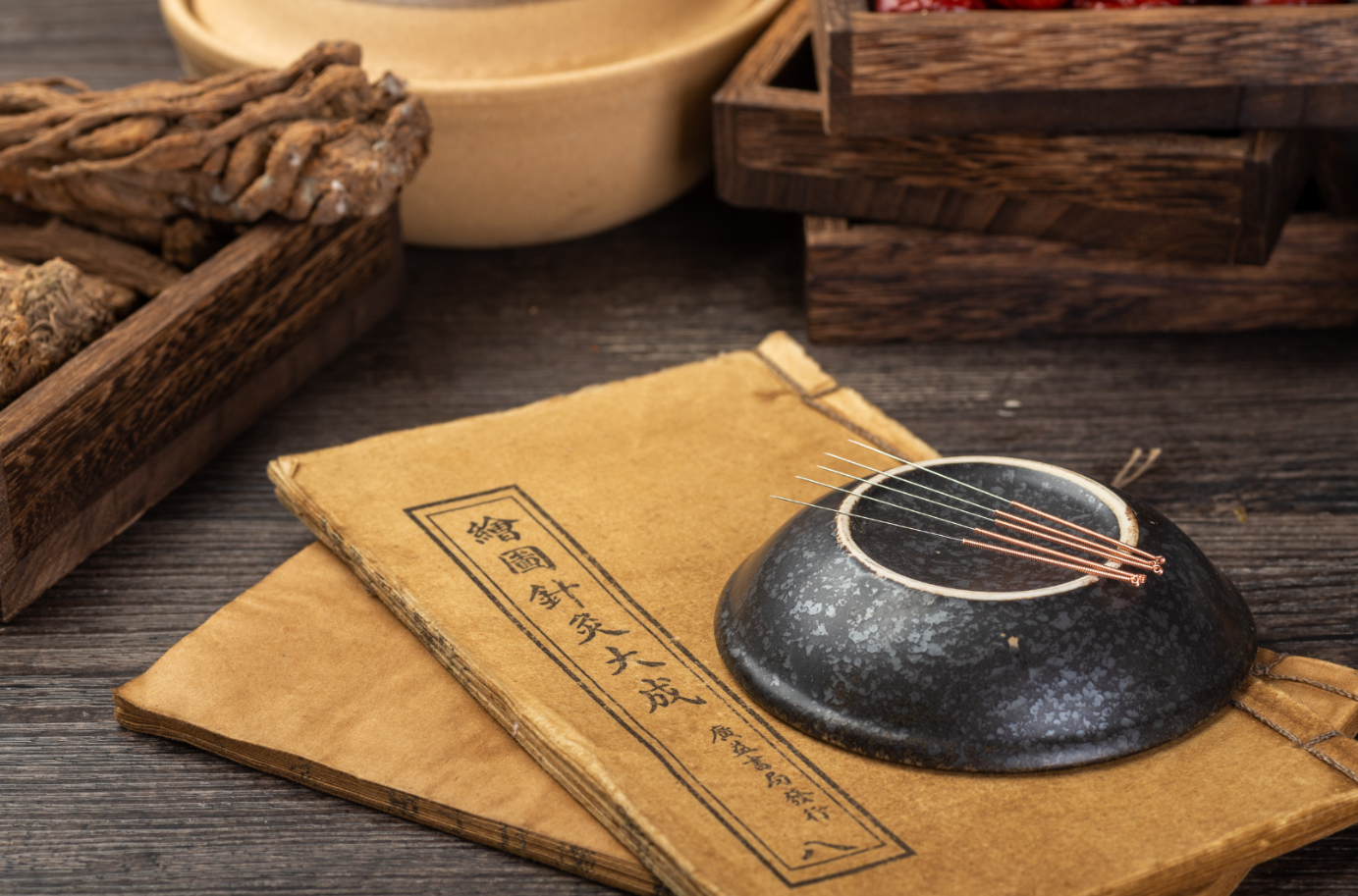
Headache & Migraine Treatment
Headache & Migraine Treatment in Boca Raton, FL
Acupuncture helps reduce headache frequency and pain, bringing more ease to everyday life.
Medically reviewed by Dr. Matthew Winke, DACM · Last reviewed
What Is Headache & Migraine?
Headache is an umbrella term covering many distinct conditions. The most important first distinction is between primary headaches — where the headache itself is the condition, as with tension-type headache and migraine — and secondary headaches caused by another underlying problem. The two most common primary types account for the vast majority of chronic headache complaints.
Tension-type headache typically feels like a steady, band-like pressure or tightness on both sides of the head, often accompanied by tenderness in the neck, shoulders, and scalp. It is usually mild to moderate, is closely linked with muscle tension, stress, posture, and long hours at screens, and can occur occasionally (episodic) or on 15 or more days per month (chronic).
Read more ↓Read less ↑
Migraine is a neurological condition — not simply a bad headache. Attacks typically bring moderate to severe throbbing pain, often on one side of the head, along with nausea, sensitivity to light and sound, and sometimes visual or sensory changes called aura. Untreated attacks commonly last 4 to 72 hours, and many patients experience warning symptoms beforehand and a drained, foggy “hangover” afterward.
Personalized acupuncture treatment for headaches and migraine focuses on reducing attack frequency, easing neck and jaw tension, improving sleep, and limiting days disrupted by head pain. Treatment distinguishes tension-type patterns from migraine patterns and follows your triggers and symptoms. The goal is steadier daily function between attacks, with care shaped to your headache history.
Headaches are one of the most common reasons adults seek care, yet they are anything but uniform — the dull, band-like pressure of a tension-type headache and the throbbing, light-sensitive misery of a migraine attack are distinct conditions with different mechanisms. What they share is their cost: missed workdays, cancelled plans, disrupted sleep, and the constant background worry about when the next one will strike.
At Acupuncture Xperts, Dr. Matthew Winke, DACM, evaluates your headache pattern, triggers, and the muscular and postural factors that feed it. He designs a personalized treatment plan around your specific presentation and goals for frequency, tension, sleep, and daily function.
How acupuncture helps Headache & Migraine
- Reducing headache frequency
- Easing neck and shoulder muscle tension that feeds head pain
- Promoting relaxation and stress regulation
- Improving circulation to the head and neck
- Improving restful sleep
- Improving daily function between headaches
Symptoms
- Band-like pressure or tightness around the head
- Throbbing or pulsing pain, often on one side
- Pain behind the eyes or at the temples
- Tenderness in the scalp, neck, or shoulder muscles
- Sensitivity to light or sound
- Nausea or queasiness during attacks
- Visual changes or aura before head pain begins
- Dizziness or lightheadedness
- Difficulty concentrating during or after attacks
- Neck stiffness accompanying head pain
- Fatigue or fogginess after a headache resolves
Risk Factors
- Family history of migraine
- Female sex and hormonal fluctuations
- High or sustained stress
- Irregular sleep patterns
- Prolonged desk and screen work
- Neck injuries or chronic neck tension
- Skipped meals or dehydration
- Frequent use of acute headache medication
- Caffeine or alcohol habits
- Jaw clenching or teeth grinding
When to Seek Professional Care
- Headaches are becoming more frequent or more severe over time
- Head pain interferes with work, sleep, or daily activities
- You rely on over-the-counter pain relievers multiple days per week
- Headaches consistently arrive with neck pain or tension
- Preventive strategies have not reduced your attack frequency
- A new or changed headache pattern appears after age 50
- Seek emergency care immediately for a sudden, severe “thunderclap” headache, or head pain with fever, stiff neck, confusion, weakness, or vision loss
Common Causes
Muscle Tension and Trigger Points
Tight suboccipital, upper trapezius, and sternocleidomastoid muscles frequently refer pain into the head — a primary driver of tension-type headaches and a common aggravator of migraine.
Migraine Triggers
Stress, hormonal fluctuations, skipped meals, dehydration, certain foods, disrupted sleep, and weather or barometric pressure changes — familiar to many South Florida residents — can all set off migraine attacks in susceptible individuals.
Neck Dysfunction
Joint restrictions and postural strain in the upper cervical spine can refer pain into the head (cervicogenic headache) and frequently overlap with both tension-type headache and migraine.
Stress and Sleep Disruption
Sustained stress, jaw clenching, and poor-quality sleep lower the threshold for both headache types — and headaches in turn disrupt sleep, creating a self-reinforcing cycle.
Posture and Screen Time
Forward-head posture during long hours of desk and device work loads the muscles at the base of the skull, a common pattern behind recurring afternoon headaches.
Medication-Overuse Rebound
Using acute headache medications too many days per month can paradoxically perpetuate headaches. Any medication changes should be made only with your prescribing physician.
How We Help
Depending on your evaluation, your plan may draw on one or more of the following therapies, often beginning with Acupuncture for Headaches & Migraines or Neuromuscular Massage Therapy.
Personalized acupuncture treatment for headaches and migraine targets points on the head, neck, and body selected for your specific pattern. Treatment focuses on reducing headache frequency, easing neck and shoulder tension, regulating stress, and improving sleep.
Neuromuscular massage treatment for headaches addresses referral patterns from the neck, shoulders, and jaw. Focused work on the suboccipital, upper trapezius, and sternocleidomastoid muscles eases postural strain that contributes to head pain.
- Easing suboccipital and scalp-referral tension
- Reducing upper trapezius and levator scapulae tension
- Relaxing jaw and temple muscle tightness
- Easing forward-head postural strain
Cupping treatment for headaches addresses layered muscle tension through the neck, shoulders, and upper back that commonly contributes to tension-type headaches and builds between migraine attacks.
Gua Sha treatment for headaches uses directed strokes along the neck and shoulders to reduce soft-tissue restriction and improve circulation in muscle groups that refer pain into the head.
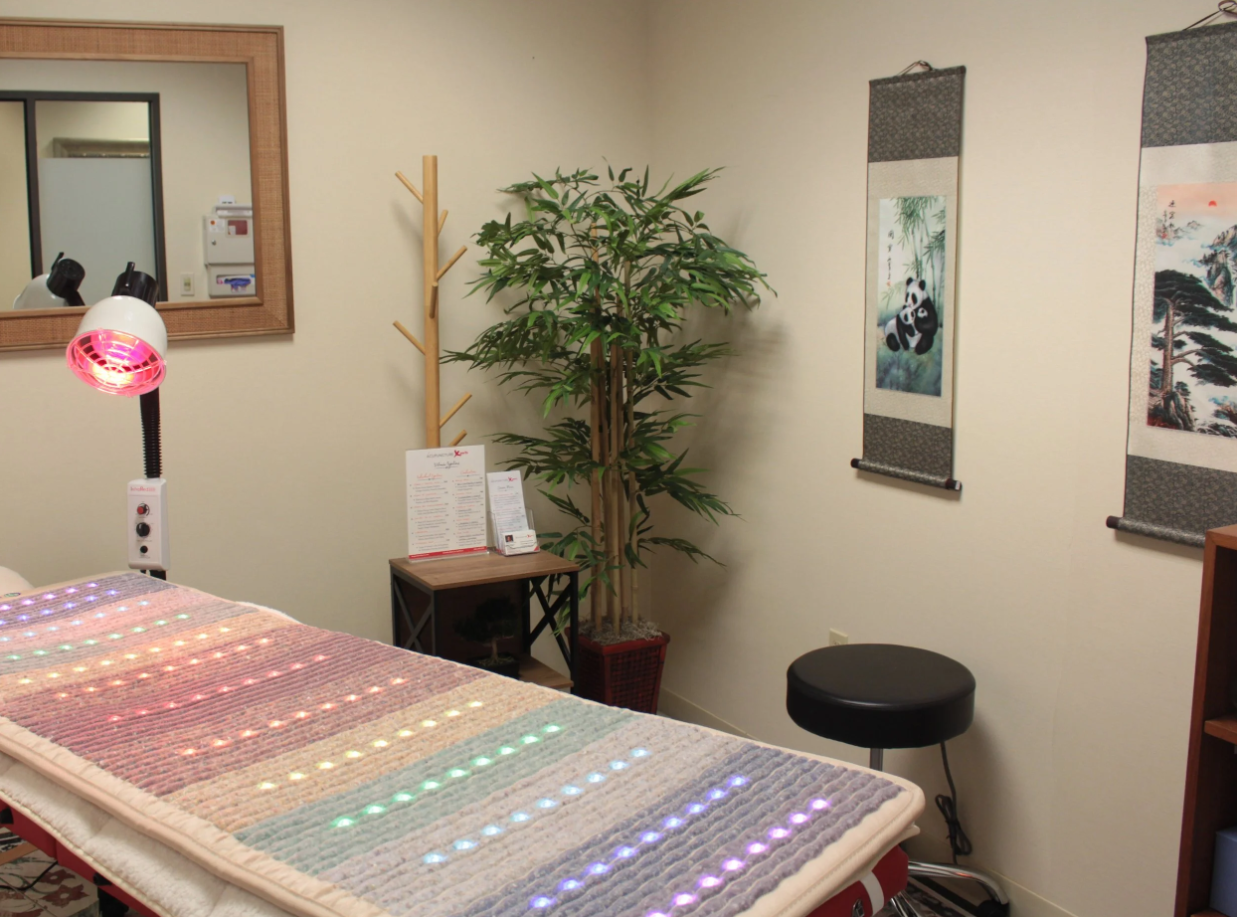
Infrared PEMF Crystal Therapy for headaches provides a quiet, low-stimulation session that promotes relaxation and nervous-system downshift for tension-related headache goals.
Migraine and headache patients travel to our Boca Raton office from Delray Beach, Boynton Beach, and Lake Worth Beach.
What the Research Says
Selected research and clinical references for headache & migraine, with findings and links to the original publications.
Cochrane Review
Cochrane Review — Acupuncture for Migraine Prevention
Across 22 trials with 4,985 participants, adding acupuncture reduced the frequency of migraine attacks, with a small but genuine effect beyond sham needling. Acupuncture performed at least as well as preventive drug treatment in comparative trials, with fewer reported side effects.
Linde K, et al. Acupuncture for the prevention of episodic migraine. Cochrane Database Syst Rev. 2016;(6):CD001218. View on PubMed →
Cochrane Review
Cochrane Review — Acupuncture for Tension-Type Headache
In 12 trials with 2,349 participants, 51% of acupuncture patients achieved at least a 50% reduction in headache frequency versus 43% with sham needling, and effects compared with routine care alone were larger. The authors concluded acupuncture is effective for frequent episodic or chronic tension-type headaches, while calling for more trials against other active treatments.
Linde K, et al. Acupuncture for the prevention of tension-type headache. Cochrane Database Syst Rev. 2016;(4):CD007587. View on PubMed →
Randomized Trial
JAMA Internal Medicine — Long-Term Migraine Trial
In 249 patients with migraine without aura, true acupuncture reduced monthly migraine attacks significantly more than sham acupuncture or a waiting-list control (a reduction of about 3.2 attacks per month versus 2.1 and 1.4, respectively), and the benefit persisted through 24 weeks of follow-up.
Zhao L, et al. The Long-term Effect of Acupuncture for Migraine Prophylaxis: A Randomized Clinical Trial. JAMA Intern Med. 2017;177(4):508-515. View on PubMed →
Meta-Analysis
Acupuncture for Chronic Pain — 39 trials, 20,827 patients
This individual-patient-data meta-analysis — which included chronic headache trials — found acupuncture superior to both sham acupuncture and no-acupuncture controls, with treatment effects that persisted over time and could not be explained by placebo alone.
Vickers AJ, et al. Acupuncture for Chronic Pain: Update of an Individual Patient Data Meta-Analysis. J Pain. 2018;19(5):455-474. View on PubMed →
Individual results vary — some patients notice changes within a few weeks, while long-established migraine patterns often need a longer course of care. Acupuncture has been studied as an addition to standard headache care, not a substitute: never stop or change prescribed migraine medication without guidance from your prescribing physician. During your consultation we will discuss what this research means for your specific headache pattern.
These summaries are educational and describe published research; they are not a guarantee of individual results.
What to Expect
We focus on conservative, non-surgical, whole-person care aimed at addressing root contributors rather than only masking symptoms.
- 1
Initial Consultation
Care begins with a thorough conversation about your health history, lifestyle, and specific goals for addressing your headache & migraine.
- 2
Evaluation
We assess the underlying contributors — movement, posture, muscular patterns, and overall wellness — to understand what may be driving your symptoms.
- 3
Personalized Treatment
Based on your evaluation, we build a customized plan that may combine several complementary therapies suited to your individual needs.
- 4
Supporting Recovery
Beyond in-office care, we offer guidance on movement, ergonomics, and lifestyle adjustments to help support lasting results.
Start here
New Patient Visit · 75 minutes · $189
Includes a detailed medical history review, Chinese medicine assessment, physical and orthopedic exam, personalized care plan, and treatment with electro-acupuncture, cupping, PEMF and infrared light therapy.
Book Your First VisitExercises & Self-Care
Muscle tension in the neck, shoulders, and jaw is one of the most common contributors to tension-type headaches, and it can aggravate migraine patterns as well. Gentle neck mobility work and relaxation training are widely recommended alongside professional headache care, which is why the movements below focus on releasing the muscles that most often refer pain into the head.
These are general examples for familiar, ongoing headache patterns — not a personalized program, and not a response to an emergency. A sudden, severe “thunderclap” headache unlike any you have had before, or a headache with fever, stiff neck, confusion, weakness, or vision loss, requires immediate emergency care, not stretching. Move slowly, and stop any exercise that provokes head pain or dizziness.
Posture
Chin Tucks
How much: 2 sets of 10, once or twice daily
Show steps ▾Hide steps ▴
- Sit upright in a sturdy chair with your feet flat on the floor, shoulders relaxed, and eyes looking straight ahead.
- Without tilting your head up or down, glide your head straight back — as if making a gentle double chin.
- Hold for 5 seconds, feeling a light stretch at the base of your skull.
- Release slowly and let your head return to its natural position.
Stretch
Upper Trapezius Stretch
How much: 3 holds of 20–30 seconds per side, once daily
Show steps ▾Hide steps ▴
- Sit upright in a sturdy chair and grasp the edge of the seat with your right hand to anchor your right shoulder down.
- Slowly tilt your left ear toward your left shoulder until you feel a gentle stretch along the right side of your neck.
- You may rest your left hand lightly on the side of your head for a slight assist — let its weight do the work, never pull.
- Hold, then return your head upright slowly and repeat on the other side.
Keep this stretch gentle — forcing it can increase neck tension and trigger a headache rather than ease one.
Stretch
Levator Scapulae Stretch
How much: 3 holds of 20–30 seconds per side, once daily
Show steps ▾Hide steps ▴
- Sit upright in a sturdy chair with your feet flat on the floor and grasp the edge of the seat with your right hand.
- Turn your head about 45 degrees to the left, then slowly lower your chin toward your left armpit.
- Rest your left hand lightly on the back of your head for a gentle assist until you feel a stretch along the back-right of your neck.
- Hold, release slowly, and repeat on the other side.
Relaxation
Diaphragmatic Breathing
How much: 5 minutes, once or twice daily — especially at the first sign of building tension
Show steps ▾Hide steps ▴
- Lie flat on your back on the floor or a firm mat with your knees bent and feet flat, or sit upright in a comfortable chair.
- Place one hand on your chest and the other on your belly.
- Inhale slowly through your nose for a count of 4, letting your belly rise while your chest stays relatively still.
- Exhale slowly through pursed lips for a count of 6, feeling your belly fall.
- Continue at this slow rhythm, letting your shoulders, jaw, and forehead soften with each exhale.
Posture
Shoulder Blade Squeezes
How much: 2 sets of 10, once daily — helpful as a break during long desk or screen sessions
Show steps ▾Hide steps ▴
- Sit upright in a sturdy chair or stand tall with your arms relaxed at your sides.
- Gently draw your shoulder blades back and down, as if tucking them into your back pockets.
- Hold for 5 seconds while breathing normally — avoid shrugging your shoulders up toward your ears.
- Release slowly and repeat.
Stop any exercise that sharply increases pain, or causes numbness, tingling, or pain radiating into a limb, and consult a qualified provider. These general examples are educational and do not replace an individual evaluation.
Frequently Asked Questions
Research suggests it can help reduce attack frequency. Cochrane reviews found acupuncture reduced migraine frequency more than usual care and slightly more than sham needling, performing at least as well as preventive medication in trials. Individual results vary, and we will discuss realistic expectations at your consultation.
No — and you should not. Acupuncture has been studied as an addition to standard care, and we design treatment to complement your prescriptions. Never stop or change prescribed migraine medication without guidance from your prescribing physician.
Tension-type headaches typically cause steady, band-like pressure on both sides of the head tied to muscle tension. Migraine is a neurological condition producing throbbing, often one-sided pain with nausea and light or sound sensitivity. Many people experience both, and treatment plans address each pattern differently.
Headache research protocols commonly involve a series of treatments over several weeks, and long-standing patterns often benefit from a structured course followed by periodic maintenance. We will outline a specific plan after evaluating your headache history.
Yes. Trigger points and joint restrictions in the neck frequently refer pain into the head — this is one of the most common patterns we see, especially in patients with long desk hours, and it responds well to a combined treatment approach.
A simple headache diary noting sleep, meals, hydration, stress, screen time, weather changes, and (where relevant) menstrual cycle timing often reveals patterns. We review your diary together to shape both treatment and practical prevention strategies.
When performed by a licensed practitioner using sterile, single-use needles, acupuncture is considered very safe, with side effects that are typically minor and short-lived. Sessions are calm and low-stimulation — a consideration many headache patients appreciate.
Of course — we regularly see headache and migraine patients from Delray Beach, Boynton Beach, Lake Worth Beach, and Lantana. The Boca Raton office is a short, calm drive up or down I-95.
Ready for fewer interruptions from headache pain? Start personalized acupuncture treatment for headache and migraine in Boca Raton, focused on frequency, tension, and sleep.
Headache treatment begins with identifying your pattern, including tension-type headache, migraine, or both. Acupuncture treatment then targets the factors that drive pain and disrupted days.
At Acupuncture Xperts, Dr. Winke evaluates your headache pattern and builds a personalized plan for frequency, neck tension, sleep, and daily function. We serve patients throughout Boca Raton, Delray Beach, Deerfield Beach, Highland Beach, Boynton Beach, and Palm Beach County and surrounding South Florida communities.
Have questions or ready to begin? Contact our Boca Raton clinic to get started.
Related reading: Acupuncture for Migraines & Headaches: What the Research Shows
Serving Boca Raton, Delray Beach, Deerfield Beach, Highland Beach, Boynton Beach, Palm Beach County.
Acupuncture Treatment for Headache & Migraine
Book a visit and we’ll build a personalized plan together.