
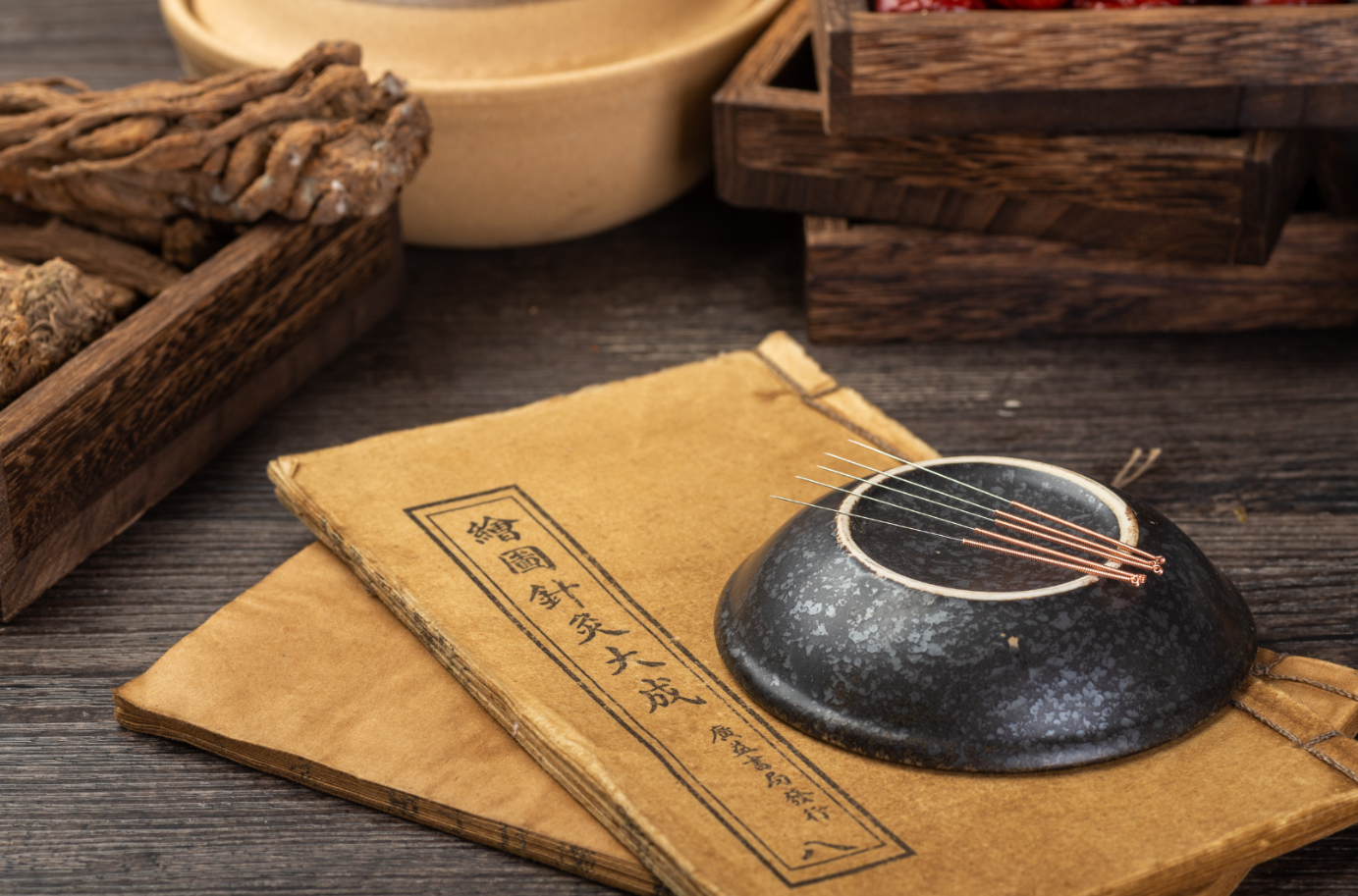
Knee Pain Treatment
Knee Pain Treatment in Boca Raton, FL
Acupuncture helps reduce knee pain and stiffness for more comfortable walking, stairs, and activity.
Medically reviewed by Dr. Matthew Winke, DACM · Last reviewed
What Is Knee Pain?
Knee pain describes discomfort in or around the knee joint, which is where the thighbone, shinbone, and kneecap meet, cushioned by cartilage and stabilized by ligaments, tendons, and muscles. Trouble in any of these structures — or in how they work together — can produce pain, stiffness, swelling, or a sense of instability.
In older adults, knee pain is frequently driven by osteoarthritis, in which the smooth cartilage that cushions the joint gradually wears down, leading to stiffness, aching, and reduced range of motion. In athletes and active people, pain more often comes from overuse or biomechanical stress — patterns behind runner’s knee (pain around the kneecap) and jumper’s knee (irritation of the tendon below the kneecap).
Read more ↓Read less ↑
These two pictures often overlap, especially in South Florida’s active older population, and the same knee can carry both arthritic changes and an overuse component. Treatment is tailored to the contributing factors and the movement demands of the knee, informed by Dr. Winke’s sports-medicine background.
Personalized acupuncture treatment for knee pain focuses on easing discomfort and stiffness so walking, stairs, exercise, training, and daily activity feel more comfortable. Treatment addresses the knee and connected muscle groups across arthritis-related and overuse patterns. Your sessions are shaped around pain, mobility, strength goals, and the activities you want to keep doing.
Knee pain is one of the most common reasons active adults and older adults alike seek care, and it shows up across a wide spectrum — from the gradual ache of osteoarthritis to the sharp, activity-related pain of a runner’s or jumper’s knee. Because the knee bears so much load with every step, squat, and stride, even modest problems there can limit walking, exercise, and daily comfort.
At Acupuncture Xperts, Dr. Matthew Winke brings a sports-medicine perspective to knee pain treatment in Boca Raton. He evaluates age-related joint changes, athletic overuse, and movement patterns to build a personalized plan for pain relief, strength, mobility, and daily function.
How acupuncture helps Knee Pain
- Reducing pain associated with osteoarthritis and overuse
- Improving circulation around the joint
- Easing surrounding muscle tension
- Improving recovery after training or activity
- Advancing exercise and strengthening goals
Symptoms
- Aching or stiffness in the knee
- Pain that worsens with stairs, squatting, or kneeling
- Swelling or a feeling of fullness
- Grinding, clicking, or popping sensations
- Pain around or behind the kneecap
- Sharp pain just below the kneecap with activity
- Stiffness after sitting or in the morning
- A sense of the knee "giving way" or buckling
- Reduced ability to fully straighten or bend the knee
- Pain that lingers after running or sports
Risk Factors
- Older age
- Previous knee injury or surgery
- Running, jumping, and court sports
- Rapid increases in training load
- Excess body weight
- Weak quadriceps, hip, or glute muscles
- Poor movement mechanics or worn footwear
- Family history of osteoarthritis
- Physically demanding, on-your-feet work
When to Seek Professional Care
- Knee pain that persists for several weeks
- Significant swelling, warmth, or redness
- A knee that locks, catches, or gives way
- Inability to fully straighten or bend the knee
- Pain that limits walking, stairs, or sports
- Pain following a fall or twisting injury
- Symptoms that keep returning with activity
Common Causes
Osteoarthritis
Age-related wearing of the joint cartilage is a leading cause of chronic knee pain, producing stiffness, aching, and reduced range of motion.
Runner’s Knee (Patellofemoral Pain)
Pain around or behind the kneecap, common in runners and active adults, often relates to how the kneecap tracks and to muscle imbalances around the hip and thigh.
Jumper’s Knee (Patellar Tendinopathy)
Repetitive jumping and loading can irritate the tendon just below the kneecap, causing focal pain that worsens with activity.
Ligament and Meniscus Injuries
Twisting, pivoting, or impact during sports can strain ligaments or tear the meniscus, leading to pain, swelling, and instability.
Overuse and Training Errors
Rapid increases in mileage, intensity, or new activity — along with worn footwear or hard surfaces — can overload the knee over time.
Muscle Weakness and Imbalance
Weakness in the quadriceps, hips, or glutes changes how force passes through the knee and can drive both arthritic and overuse pain.
How We Help
Depending on your evaluation, your plan may draw on one or more of the following therapies, often beginning with Acupuncture for Knee Pain or Neuromuscular Massage Therapy.
Personalized acupuncture treatment for knee pain targets points around the knee and connected muscle groups to address discomfort, stiffness, and function across arthritis-related and overuse-related patterns.
Neuromuscular massage treatment for knee pain addresses tightness and trigger points in the quadriceps, hamstrings, and hip muscles that influence how load passes through the joint. Treatment targets patterns associated with runner’s knee, osteoarthritis, and activity-related strain.
- Easing quadriceps and IT-band tension
- Easing hip and glute trigger-point tension
- Reducing overuse-related muscular tightness
- Improving recovery after activity
Cupping treatment for knee pain addresses muscular tightness in the thigh and calf, improving circulation and movement around an overloaded or guarded knee.
- Improving local circulation
- Reducing muscle tension
- Improving recovery after activity
- Making movement more comfortable
Injection Therapy for knee pain targets trigger points and soft-tissue dysfunction in the muscles that support and control the joint when clinically appropriate.
Infrared PEMF Crystal Therapy for knee pain applies gentle warmth and pulsed energy to ease stiffness and encourage relaxation, circulation, and recovery around an achy knee.
Gua Sha treatment for knee pain uses directed strokes through the thigh and around the knee to improve circulation and reduce soft-tissue restriction associated with overuse and joint stiffness.
We treat knee-pain patients from Parkland, Coral Springs, and Coconut Creek along with our Boca Raton neighbors.
What the Research Says
Selected research and clinical references for knee pain, with findings and links to the original publications.
Meta-Analysis
Acupuncture for Chronic Pain — 39 trials, 20,827 patients
This individual-patient-data meta-analysis of 39 high-quality trials (20,827 patients) found acupuncture superior to both sham and no-acupuncture control for chronic pain conditions including osteoarthritis, with effects that persisted over time and could not be explained by placebo alone.
Vickers AJ, et al. Acupuncture for Chronic Pain: Update of an Individual Patient Data Meta-Analysis. J Pain. 2018;19(5):455-474. View on PubMed →
Clinical Guideline
ACR / Arthritis Foundation Osteoarthritis Guideline
This joint American College of Rheumatology and Arthritis Foundation guideline conditionally recommends acupuncture for patients with knee, hip, and/or hand osteoarthritis, citing its potential benefit for pain and its low risk of harm while acknowledging that the certainty of the evidence is limited.
Kolasinski SL, et al. 2019 American College of Rheumatology/Arthritis Foundation Guideline for the Management of Osteoarthritis of the Hand, Hip, and Knee. Arthritis Care Res (Hoboken). 2020;72(2):149-162. View on PubMed →
Randomized Trial
Intensive Acupuncture vs Sham for Knee Osteoarthritis (Tu et al.)
In this multicenter sham-controlled trial, intensive electro-acupuncture produced a higher response rate at 8 weeks than sham (60.3% vs 47.3%), with benefits lasting through 26 weeks; manual acupuncture, however, was not significantly better than sham at 8 weeks — a clear reminder that results can vary by technique.
Tu JF, et al. Efficacy of Intensive Acupuncture Versus Sham Acupuncture in Knee Osteoarthritis: A Randomized Controlled Trial. Arthritis Rheumatol. 2021;73(3):448-458. View on PubMed →
Because trial results vary — especially by acupuncture technique and by the comparison used — individual outcomes differ from person to person. During your consultation we will discuss what the research means for your specific knee.
These summaries are educational and describe published research; they are not a guarantee of individual results.
What to Expect
We focus on conservative, non-surgical, whole-person care aimed at addressing root contributors rather than only masking symptoms.
- 1
Initial Consultation
Care begins with a thorough conversation about your health history, lifestyle, and specific goals for addressing your knee pain.
- 2
Evaluation
We assess the underlying contributors — movement, posture, muscular patterns, and overall wellness — to understand what may be driving your symptoms.
- 3
Personalized Treatment
Based on your evaluation, we build a customized plan that may combine several complementary therapies suited to your individual needs.
- 4
Supporting Recovery
Beyond in-office care, we offer guidance on movement, ergonomics, and lifestyle adjustments to help support lasting results.
Start here
New Patient Visit · 75 minutes · $189
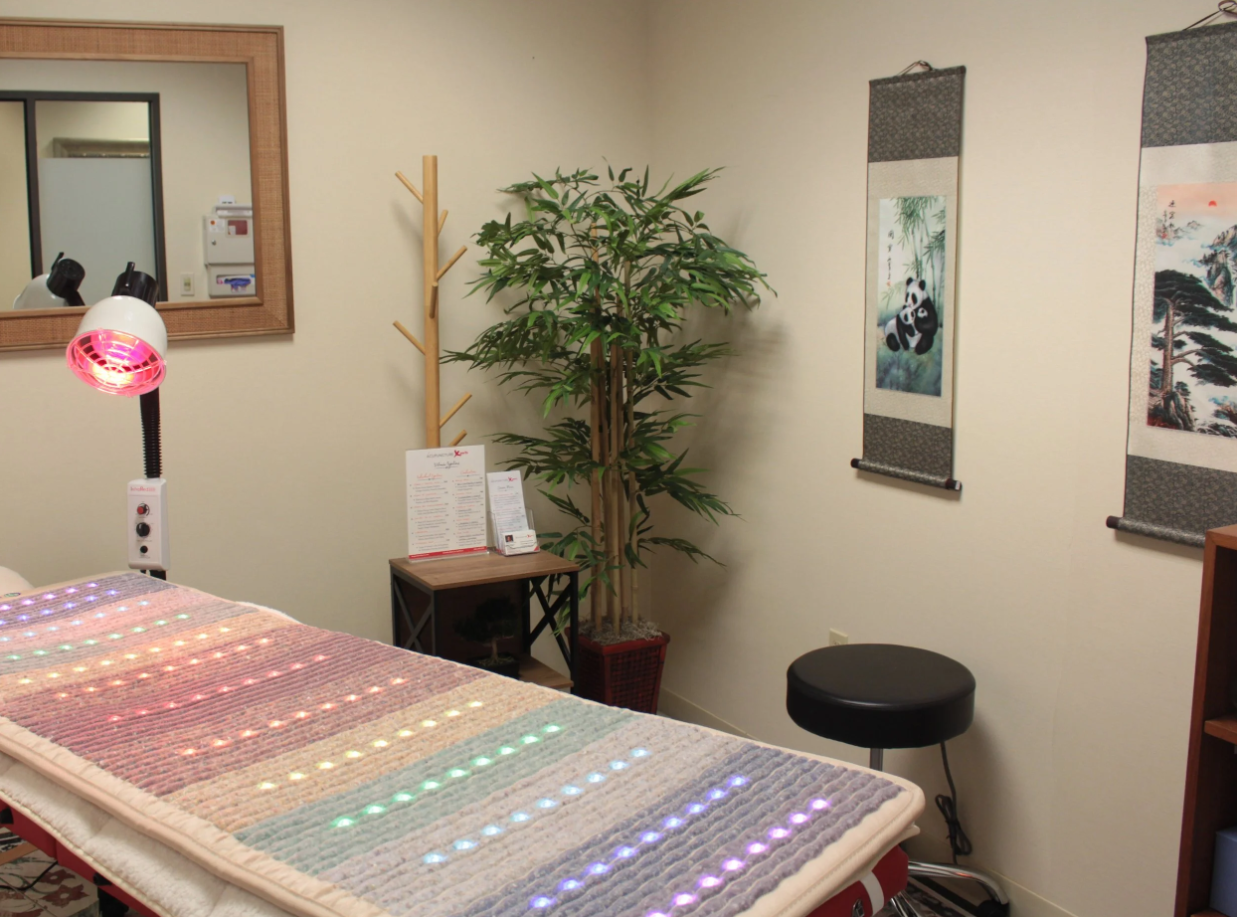
Includes a detailed medical history review, Chinese medicine assessment, physical and orthopedic exam, personalized care plan, and treatment with electro-acupuncture, cupping, PEMF and infrared light therapy.
Book Your First VisitExercises & Self-Care
Strengthening the muscles around the knee — especially the quadriceps — is strongly recommended in osteoarthritis guidelines and is a cornerstone of recovery from most athletic knee problems. The movements below are widely recommended, low-impact starting points chosen to build support around the joint without overloading it.
Work within a pain-free range, progress gradually, and stop any movement that sharply increases knee pain or swelling. These are general examples rather than a personalized plan — during your visit, Dr. Winke draws on his sports-medicine training to match exercises to whether your pain is arthritis-related, overuse-related, or both.
Activation
Quad Sets
How much: 2 sets of 10, holding 5 seconds each, twice daily
Show steps ▾Hide steps ▴
- Sit on the floor or a firm bed with the leg you want to work straight out in front of you and your other knee comfortably bent.
- Tighten the thigh muscle of the straight leg, pressing the back of that knee gently down toward the surface.
- Hold the squeeze while keeping the leg straight, then relax fully.
Strength
Straight-Leg Raise
How much: 2 sets of 10 per leg, once daily
Show steps ▾Hide steps ▴
- Lie flat on your back on the floor or a firm mat with one knee bent and that foot flat on the floor; keep the other leg straight.
- Tighten the thigh of the straight leg, then slowly lift it to about the height of your opposite bent knee.
- Hold briefly, then lower the leg slowly to the floor with control.
Keep the working leg straight; if your knee hurts sharply, lift it a smaller distance.
Mobility
Heel Slides
How much: 2 sets of 10 per leg, once daily
Show steps ▾Hide steps ▴
- Lie flat on your back on the floor or a firm mat with both legs straight.
- Slowly slide one heel along the floor toward your buttock, bending that knee only as far as is comfortable.
- Slide the heel back down until the leg is straight again, then repeat.
Functional Strength
Sit-to-Stand
How much: 2 sets of 8–10, once daily
Show steps ▾Hide steps ▴
- Sit upright toward the front of a sturdy chair with your feet flat on the floor about hip-width apart and your arms crossed over your chest or reaching forward.
- Lean slightly forward and press through your heels to stand up fully.
- Lower yourself back down slowly and with control, tapping the seat rather than dropping into it.
Use a higher chair or push off the armrests if standing is difficult, and stop if your knee feels like it may give way.
Stretch
Standing Calf Stretch
How much: 3 holds of 20–30 seconds per side, once daily
Show steps ▾Hide steps ▴
- Stand facing a wall with both hands on it at about shoulder height, one foot forward and the other stepped well back with its heel flat on the floor.
- Keeping the back knee straight and the heel down, lean gently toward the wall until you feel a stretch in the back calf.
- Hold, then switch legs.
Stop any exercise that sharply increases pain, or causes numbness, tingling, or pain radiating into a limb, and consult a qualified provider. These general examples are educational and do not replace an individual evaluation.
Frequently Asked Questions
National osteoarthritis guidelines conditionally recommend acupuncture for knee OA, citing possible benefit for pain and low risk of harm. Research suggests it may help support comfort, though results vary.
Both are commonly addressed. We consider whether your pain is arthritis-related, overuse-related (such as runner’s or jumper’s knee), or a combination, and tailor care accordingly.
Runner’s knee, or patellofemoral pain, is pain around or behind the kneecap that is common in active people. It often relates to muscle imbalances and how the kneecap tracks.
Yes. Dr. Winke holds a doctoral specialization in sports medicine, which informs how the knee is evaluated and how athletic and age-related factors are addressed together.
Many people improve with conservative approaches such as targeted strengthening, activity adjustments, and supportive therapies. We focus on non-surgical options.
Very. Strengthening the quadriceps and surrounding muscles is a cornerstone of both osteoarthritis guidelines and athletic knee recovery, and it complements in-office care.
This depends on the cause and how long the pain has been present. Longstanding or arthritic knee pain is usually approached as a series of sessions.
Yes. Patients from Parkland, Coral Springs, Coconut Creek, and Margate see us for knee pain regularly. Our Boca Raton office has front and garage parking, making visits easy even on a stiff knee.
Ready to make walks, stairs, and favorite activities feel more manageable? Start personalized acupuncture treatment for knee pain in Boca Raton, focused on comfort and mobility.
Knee pain can shorten walks, sideline favorite sports, and make simple stairs feel daunting. Acupuncture treatment is tailored to osteoarthritis, overuse, or the combination of factors driving your pain.
At Acupuncture Xperts, Dr. Winke evaluates your knee and builds a focused plan for comfort, strength, mobility, and daily function. We serve patients throughout Boca Raton, Delray Beach, Deerfield Beach, Highland Beach, Boynton Beach, Palm Beach County, and surrounding South Florida communities.
Have questions or ready to begin? Contact our Boca Raton clinic to get started.
Serving Boca Raton, Delray Beach, Deerfield Beach, Highland Beach, Boynton Beach, Palm Beach County.
Acupuncture Treatment for Knee Pain
Book a visit and we’ll build a personalized plan together.